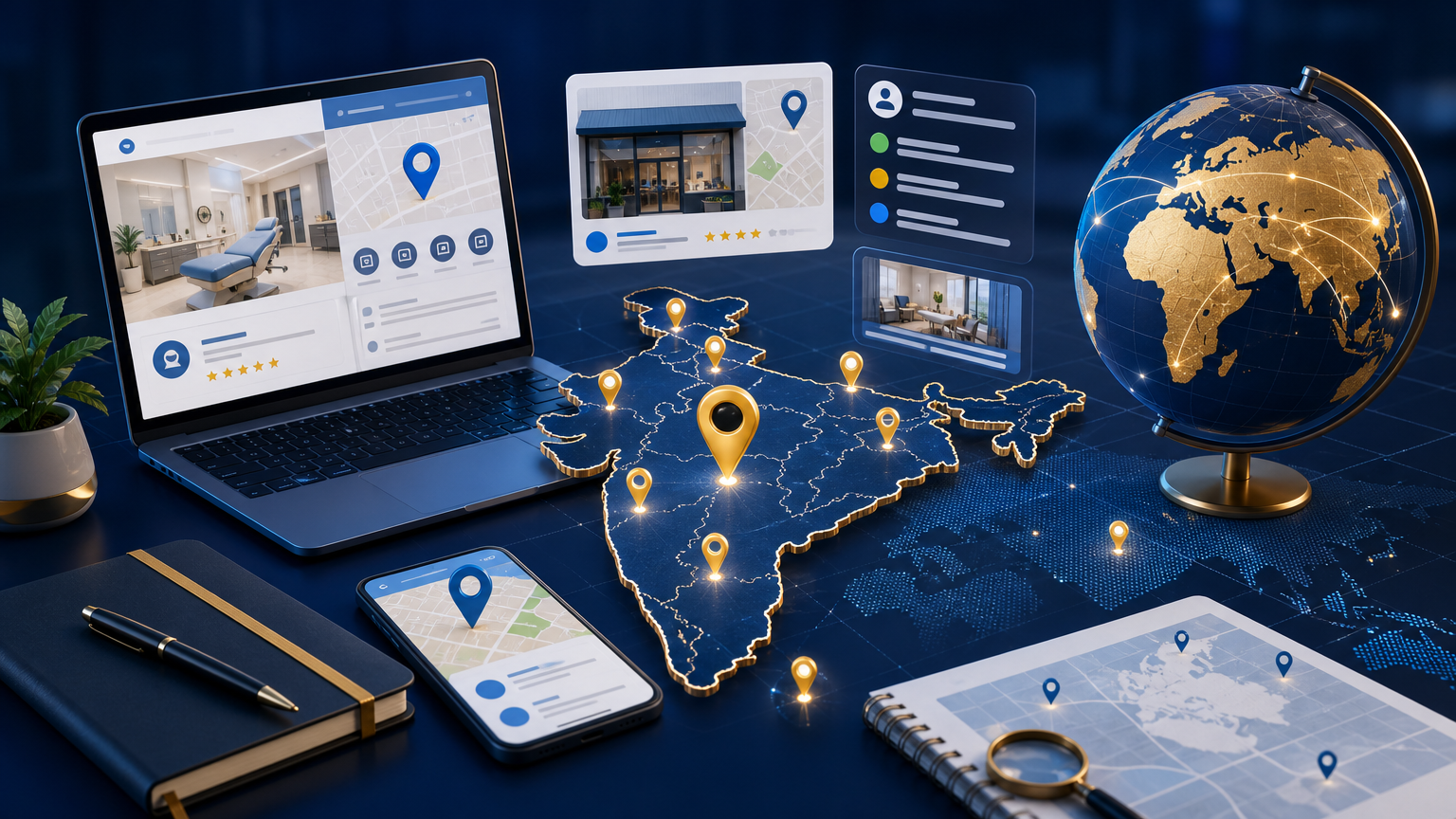
Implementing a robust local seo for clinics strategy is no longer optional for healthcare providers aiming to capture regional patient demand. As patients increasingly rely on search engines to find nearby medical specialists, your practice must appear exactly when and where they search. A clinic that fails to optimize for local queries leaves a significant volume of qualified traffic to competitors. By prioritizing geographic relevance, your facility can transition from being a hidden provider to the primary choice for local health inquiries. This guide explores the foundational steps required to master your digital presence and ensure consistent patient acquisition.
Table of Contents
- The Strategic Importance of Local SEO for Clinics
- Optimizing Your Google Business Profile
- Technical Foundations and Website Structure
- Content Strategy for Healthcare Providers
- Local SEO vs. Traditional SEO: Key Differences
- Practical Implementation Checklist
- Common Mistakes to Avoid
- Frequently Asked Questions
- How ImagineInk Can Help
The Strategic Importance of Local SEO for Clinics
In the healthcare sector, trust is the primary currency. When a patient searches for a specialist, they are usually in a state of immediate need or proactive concern. Effective local seo for clinics ensures that your practice signals authority and accessibility before a patient even makes their first call. Unlike broad, national search efforts, local strategies focus on the "near me" intent, which historically carries higher conversion rates for service-based businesses.
Investing in digital marketing for doctors and clinics allows you to segment your audience based on proximity. For clinics in high-density regions, showing up in the local map pack—the cluster of three results displayed at the top of Google—can increase inbound appointment requests significantly. This is not just about rankings; it is about building a digital infrastructure that reflects your clinic’s physical reliability and professional standards.
Furthermore, local SEO bridges the gap between digital discovery and physical entry. A patient may see an advertisement, but a local search result validates your legitimacy through map integration, star ratings, and distance indicators. When your practice appears in the local pack, you are not just a name on a page; you are a solution to their immediate medical challenge. In a world where patients research symptoms before visiting a doctor, your presence in local search results acts as a digital referral, providing the social proof necessary to turn a searcher into a patient.
The competitive nature of healthcare means that location-based searches often result in immediate action. If someone searches for an "urgent care center" or "dermatologist" in their specific city, they are often ready to book within the hour. By appearing prominently, you capture this high-intent traffic, effectively shortening the patient journey from inquiry to consultation.
Optimizing Your Google Business Profile
Your Google Business Profile (GBP) acts as the modern-day storefront. For clinics, this profile is the most critical touchpoint in the patient journey. To maximize visibility, every detail must be accurate, verified, and regularly updated. Incomplete profiles are penalized by search algorithms, while optimized ones tend to dominate the local results.
Key actions to take for your clinic profile include:
- Categorization: Select the most precise primary and secondary categories. If you are a dental clinic, choose "Dentist" rather than just "Medical Clinic" to improve relevancy.
- NAP Consistency: Ensure your Name, Address, and Phone number are identical across every digital asset, including your website, social media, and local business directories.
- Review Management: Actively solicit patient feedback. Respond professionally to all reviews, as this signals to Google that your clinic is active and patient-focused. Remember to follow HIPAA regulations when responding—never reveal personal health information.
- Service Lists: Use the dedicated features in your dashboard to list specific services, treatments, and procedures to capture long-tail search intent.
- Q&A Integration: Proactively populate the Q&A section of your GBP with common patient questions. This provides immediate value and demonstrates active management.
Beyond these basics, you must utilize the "Updates" feature in GBP to post news about your clinic. Whether you are adding a new practitioner to your team, updating your holiday hours, or sharing a link to a new health blog post, keeping your profile updated signals that your business is thriving. This engagement is a direct ranking factor. Remember that search engines prioritize entities that provide the most helpful, current information to their users, and your GBP is the fastest way to convey this to Google.
Technical Foundations and Website Structure
Even the best local strategy will fail if your website is slow, insecure, or difficult to navigate. Patients often research treatments on mobile devices while on the go. Your site must provide a seamless experience, regardless of whether the user is on a desktop or a smartphone. Investing in professional local SEO services ensures your technical backend supports your local visibility goals.
Search engines crawl your site to determine its relevance to local queries. This involves using structured data (Schema markup) to tell Google exactly where you are and what you do. By implementing "LocalBusiness" schema, you provide the search engine with explicit metadata regarding your business hours, service area, and accepted insurance providers. This technical clarity drastically reduces the ambiguity of your online presence.
Mobile-first indexing is the current standard. A clinic website that is slow to load on 4G networks will lose traffic immediately. Optimize your images, leverage browser caching, and ensure your "Book Appointment" buttons are clearly visible above the fold on mobile screens. Furthermore, prioritize HTTPS security. Patients sharing sensitive health inquiries will not trust a "Not Secure" website, and Google is highly unlikely to rank a site that does not meet modern security standards.
Architecture matters. Ensure your URL structure is logical, such as yourclinic.com/services/physical-therapy rather than a long string of random characters. This helps both Google and your patients understand exactly what they are clicking on. Additionally, internal linking should point toward your appointment booking pages from every piece of educational content, creating a cohesive path to conversion.
Content Strategy for Healthcare Providers
Content is the bridge between a search query and a booked appointment. Rather than writing generic medical advice, focus on answering the specific questions your local patients are asking. If your clinic specializes in orthopedics, your blog should cover post-surgery recovery or common joint issues relevant to your specific city or neighborhood.
Consider the following content tactics for your clinic:
- Hyper-Local Landing Pages: If your clinic serves multiple suburbs or districts, create dedicated pages for each location, highlighting specific nearby landmarks or regional health needs.
- Patient FAQ Pages: Address common concerns about billing, insurance coverage, and appointment scheduling to reduce friction in the conversion funnel.
- Practitioner Profiles: Humanize your brand by highlighting the credentials, education, and patient care philosophies of your medical staff. Patients want to know who is performing their procedure.
- Condition-Specific Guides: Create comprehensive guides for common procedures (e.g., "What to Expect During Your First Physical Therapy Session in [City Name]").
To really excel, incorporate local keywords naturally. Use phrases like "Pediatrician in downtown [City Name]" or "Orthopedic care near [Local Landmark]" in your headers and body copy. However, avoid "keyword stuffing," which is when you cram words into text to manipulate rankings. Search engines today prioritize natural language processing; they want to see high-quality content that answers questions comprehensively. If you provide genuine value, your rankings will follow.
Additionally, video content is becoming increasingly powerful for medical practices. Short clips of your practitioners explaining simple concepts or tours of your clean, modern office can significantly increase the "Time on Page" metric, which is a strong signal of site quality to search engines.
Local SEO vs. Traditional SEO: Key Differences
Many clinics confuse broad SEO with local efforts. While both aim to increase traffic, the intent and execution differ significantly. The following table highlights why local strategies are uniquely suited for physical healthcare practices.
| Feature | Traditional SEO | Local SEO for Clinics |
|---|---|---|
| Primary Goal | Global Brand Awareness | In-Clinic Appointment Leads |
| Target Audience | Broad/National | Geographically Targeted |
| Ranking Signals | Backlinks, Domain Authority | GBP Signals, NAP, Local Citations |
| Content Focus | Educational/Evergreen | Clinical/Patient Experience |
| Success Metric | Organic Traffic Volume | Map Pack Rankings & Bookings |
The distinction is vital. Attempting to rank for a national keyword like "best orthopedics" is often a waste of resources for a single-location clinic. Instead, prioritizing "orthopedics in [City Name]" provides a higher return on investment and connects you with users who are actually capable of visiting your facility. Traditional SEO relies heavily on long-term authority building and broad link acquisition, whereas local SEO relies on signals that verify you are exactly where you say you are, helping local patients find you in their moment of need.
For Digital Marketing for Doctors and Clinics teams, SEO services for small businesses can make local seo for clinics easier to connect with the pages that drive revenue.
Practical Implementation Checklist
The fastest way to improve performance is to work through a structured execution list instead of treating SEO as a collection of disconnected tasks. For digital marketing for doctors and clinics, that means pairing visibility work with conversion intent.
Healthcare brands can adapt this approach through SEO for doctors and clinics that prioritizes local trust, appointment intent, and patient-friendly answers.
- Audit current site architecture: Ensure indexation and crawl health are optimal before changing page content. Fix any 404 errors or redirect chains.
- Map high-intent keywords: Align terms to category, product, and commercial landing pages rather than forcing every phrase into a single page.
- Optimize internal links: Ensure authority flows to the pages most closely tied to patient revenue. Link your home page to key service pages.
- Enhance meta-content: Improve page titles, descriptions, and headers to include location modifiers. Ensure every page has a unique meta title.
- Technical hygiene: Verify mobile usability, page speed, and schema markup implementation. Use the "Google Search Console" to monitor health.
- Track conversions: Monitor phone calls, form fills, and appointment bookings as your primary KPIs. Connect these to Google Analytics 4.
- Solicit Reviews: Create a system for emailing satisfied patients to ask for a Google review after a successful appointment.
By checking off these items monthly, you ensure your clinic remains competitive. SEO is not a "set it and forget it" task; it is an ongoing process of refinement that rewards those who stay consistent and attentive to the needs of their patient base.
Common Mistakes to Avoid
Most underperforming campaigns fail because execution is fragmented. Businesses either over-focus on broad vanity keywords, publish thin content, or ignore the commercial pages that should carry the strongest search intent. To avoid these traps, ensure you are not doing the following:
- Chasing volume-heavy, generic keywords: Avoid competing for terms like "what is a cough" if you are a specialty cardiology clinic. These queries rarely lead to appointments.
- Ignoring duplicate metadata: Each page must have unique headers and descriptions to avoid internal cannibalization, where Google is unsure which page to rank for a specific term.
- Neglecting trust signals: Failing to include patient testimonials, doctor certifications, or insurance partnerships on service pages weakens conversion.
- Inconsistent NAP data: Conflicting addresses or phone numbers across the web will confuse search engines and hurt your local ranking significantly.
- Failing to report on revenue: Do not just look at traffic. Look at how many patients actually arrived at the clinic because of a digital search. Use call tracking to verify where leads originate.
Additionally, avoid the temptation to buy fake reviews. Google’s algorithms are highly adept at identifying artificial feedback, and the penalty for discovery can result in your profile being suspended or permanently removed from Google Maps, which would be disastrous for your local patient acquisition.
FAQ: Local SEO For Clinics
What is the best approach to local seo for clinics?
The best approach centers on a clean, verified Google Business Profile, consistent NAP citations across the web, and high-quality location-specific content on your website that answers the specific health questions of your local community.
How does local seo for clinics help lead generation?
By capturing users who have high commercial intent—those actively searching for a provider in their immediate area—you generate leads that are already at the bottom of the conversion funnel and ready to book.
Is local seo for clinics useful for international markets?
Absolutely. As global consumers increasingly search for healthcare services via mobile devices, local optimization is essential for remaining competitive in major urban centers and regional hubs, regardless of the country.
How much should a business invest in local seo for clinics?
Investment levels vary based on competition and the number of locations. It is generally recommended to look at SEO services for small businesses that offer scalable, results-driven packages rather than one-size-fits-all solutions. Focus on a budget that allows for consistent content creation and technical monitoring.
When should a company hire a local seo for clinics agency?
If you find that your clinic is missing from the Google map pack for your primary service keywords, or if your competitors consistently outrank you in your local region, it is time to engage professional help to perform a comprehensive audit and recovery strategy.
How ImagineInk Can Help
Navigating the complexities of search engine algorithms while managing a full-time medical practice is a significant challenge. At ImagineInk, we specialize in SEO for doctors and clinics, helping healthcare providers establish a dominant local presence that translates into real patient growth. We understand that your digital presence is an extension of your professional reputation.
Our team handles the technical heavy lifting—from local citation building and profile optimization to content creation—so you can focus entirely on patient care. If you are ready to stop leaving leads to your competitors and start attracting the patients you are best equipped to serve, our experts are prepared to audit your current digital state and build a roadmap for your clinic’s success. Contact us today to discuss how we can tailor a strategy to your specific medical specialty and local market.
"Quality local SEO is the difference between a clinic that struggles to fill its schedule and one that builds a waiting list of local patients."
Every medical practice has unique strengths. Whether you are a small neighborhood practice or a multi-location specialist center, your local footprint can be expanded through deliberate, data-driven optimization. Let us help you turn your website into your most effective patient acquisition tool.
Need this strategy applied to your business?
Get a focused growth plan tailored to your market, budget, and conversion goals.
Book a Strategy Call